Intersectionality

Intersectionality: Why Aren’t Indigenous Peoples of African Descent Discussed in Conversations Regarding Indigeneity?

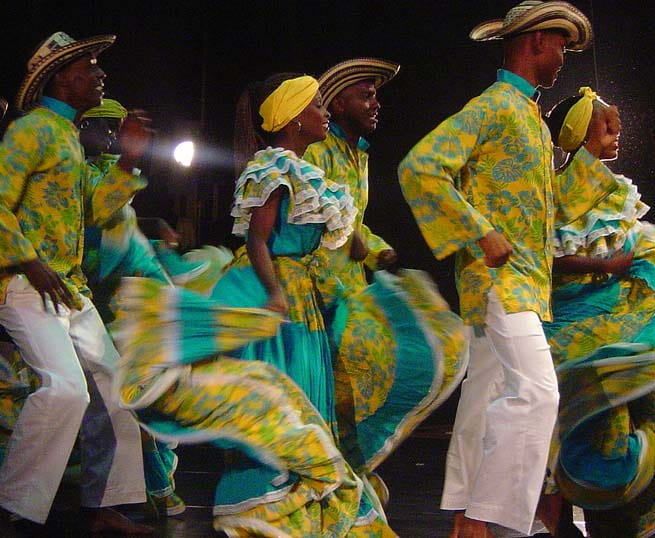
When most think of indigenous people (especially those in Latin America), indigenous people who also have African heritage are not a part of the conversation. Specifically, in our class where we discussed a variety of different indigenous rights and issues, Afro-Indigeneity was not a topic we discussed until a few students voiced their thoughts on the lack of such content. And even then, the discussion was brief and only a limited amount of sources were provided as course materials (at no fault of the professor). While indigenous people in Latin America are a marginalized and oppressed group, the Afro-Latinx/Indigenous community is marginalized within the already marginalized group– much like how African American or Black people are oppressed and marginalized in the United States and queer Black people are marginalized within the Black community.
What Afro-Indigenous people are deprived of is their ability to be indigenous. As Avi Chomsky and Cindy Forster express in their 2006 article “Who Is Indigenous? Who Is Afro-Colombian? Who Decides?”, people who claim both African and indigenous heritage are not recognized as both African and indigenous because they are considered “peasants” and are “defined . . . as “a group of families of African descent that possesses its own culture, shares a history, and has its own traditions and customs . . . who demonstrate and conserve a consciousness of their identity that distinguishes them from other ethnic groups”. In other words, Afro-Colombian people are their own separate group/ethnicity and are thus excluded from indigenous communities. They must pick one identity over the other and many times that identity is chosen for them; fore, Afro-Indigenous people are not indigenous to many people because of their African heritage– they are Afro-whatever (whatever referring to the Latin American country in which African-descended people live/populate).
Afro-Indigenous peoples are excluded from indigenous conversations just as it is difficult for indigenous women to be a part of the same discussions. They have to prove themselves in ways that other indigenous people do not; and yet, Afro-Indigenous people are still not considered members of indigenous communities. They are not allowed to have more than one identity. They must be what their country and society dictate they are.
This is to say that not all Afro-Latinx American people are of indigenous descent and are shunned or excluded from the communities, but the fact remains that there is a lack of scholarship on Afro-Indigenous people and their inclusion in indigenous communities.
 

Works Cited

Chomsky, Avi, and Cindy Forster. “Who Is Indigenous? Who Is Afro-Colombian? Who Decides?”
Cultural Survival. December 2006. Accessed June 2019. https://www.culturalsurvival.org/publications/cultural-survival-quarterly/who-indigenous-who-afro-colombian-who-decides.
McGrath, Elena. “The Indian Question.” Indigenous Rights in Latin America, Carleton College,
Northfield, MN, April 5, 2019
Postero, Nancy Grey, and Leon Zamosc. “Introduction: Indigenous Movements and the Indian
Question in Latin America.” In The Struggle for Indigenous Rights in Latin America, 1-31. Sussex Academic Press, 2012.

Afro-Indigenous People and Relations

[et_pb_section fb_built=”1″ admin_label=”Section” _builder_version=”3.21.4″][et_pb_row _builder_version=”3.21.4″][et_pb_column type=”4_4″ _builder_version=”3.21.4″][et_pb_text _builder_version=”3.21.4″]

Afro-indigenous people in Central and South American countries seem to be poorly represented; information about their presence is difficult to find. Although certain sources indicate that indigenous Latin Americans historically intermingled with Africans and people of African descent who were brought to the region as slaves, indigenous people seem to exist in their own category apart from Afro-Latin Americans. Additionally, although the terms mestizo (person of European and indigenous heritage) and mulatto (person of mixed European and African descent) are often used in scholarship and literature, there doesn’t seems to be a common or evident term for people with mixed Afro-indigenous heritage.

[/et_pb_text][/et_pb_column][/et_pb_row][et_pb_row _builder_version=”3.21.4″][et_pb_column type=”1_3″ _builder_version=”3.21.4″][et_pb_image src=”https://indigenousrightslatinamerica.hist.sites.carleton.edu/wp-content/uploads/2019/06/1.jpg” _builder_version=”3.21.4″][/et_pb_image][/et_pb_column][et_pb_column type=”1_3″ _builder_version=”3.21.4″][et_pb_image src=”https://indigenousrightslatinamerica.hist.sites.carleton.edu/wp-content/uploads/2019/06/2.jpg” _builder_version=”3.21.4″][/et_pb_image][/et_pb_column][et_pb_column type=”1_3″ _builder_version=”3.21.4″][et_pb_image src=”https://indigenousrightslatinamerica.hist.sites.carleton.edu/wp-content/uploads/2019/06/3.jpg” _builder_version=”3.21.4″][/et_pb_image][/et_pb_column][/et_pb_row][et_pb_row _builder_version=”3.21.4″][et_pb_column type=”1_2″ _builder_version=”3.21.4″][et_pb_image src=”https://indigenousrightslatinamerica.hist.sites.carleton.edu/wp-content/uploads/2019/06/4.jpg” _builder_version=”3.21.4″][/et_pb_image][/et_pb_column][et_pb_column type=”1_2″ _builder_version=”3.21.4″][et_pb_image src=”https://indigenousrightslatinamerica.hist.sites.carleton.edu/wp-content/uploads/2019/06/5.jpg” _builder_version=”3.21.4″][/et_pb_image][/et_pb_column][/et_pb_row][et_pb_row _builder_version=”3.21.4″][et_pb_column type=”4_4″ _builder_version=”3.21.4″][et_pb_blurb _builder_version=”3.21.4″]

[1]

[/et_pb_blurb][/et_pb_column][/et_pb_row][et_pb_row _builder_version=”3.21.4″][et_pb_column type=”4_4″ _builder_version=”3.21.4″][et_pb_text _builder_version=”3.21.4″]

As a result, the existence people of this racial makeup is mostly disregarded or ignored. This limitation on the exploration of mixed-race people indicates the control of white people in society, as people are only relevant if they are white in some aspect. Even so, only people who are completely white are valued and treated with respect. This ignorance of the presence of black people in and related to indigenous communities is especially evident in the context of Central and South America. In general, scholarship about any type of relationships that exist between people of African descent and indigenous people explores this concept in North American tribal communities. However, this information can potentially apply to similar interactions in the context of Latin America, revealing more about race dynamics and the presence of minority groups in that region.

[/et_pb_text][/et_pb_column][/et_pb_row][et_pb_row _builder_version=”3.21.4″][et_pb_column type=”4_4″ _builder_version=”3.21.4″][et_pb_text _builder_version=”3.21.4″]

In his article Dangerous Decolonizing: Indians and Blacks in the Legacy of Jim Crow, author Brian Klopotek explores the presence of blackness in Indian communities, specifically in the Choctaw tribe, as well as the general relationships between black people and Native Americans. He discusses how existing indigenous methodologies limit research in certain ways. The author mentions that U.S. indigenous studies only explore interracial relationships as they exist between Indians and whites. This indicates that U.S. society is very white dominated, because the existence of Native Americans (and other minority groups) is only discussed as it relates to white people. The same limitations seem to exist in scholarship about indigenous Latin Americans, most likely because in this context, a lot of history of indigenous people was written by Europeans. As a result, more modern research about indigenous communities and cultures, especially that created by members of these tribes, often ignore relationships they have with any other racial groups, seeking instead to share the story of indigenous people because they have been silenced for so long. Similarly, Klopotek mentions, the commonalities indigenous people share with other racial minorities are often ignored because research tries to set Indians apart from other people of color. However, as members of relatively diverse communities who experience oppression and marginalization, Native Americans and scholarship about them should explore how they fit into greater society.

[/et_pb_text][/et_pb_column][/et_pb_row][et_pb_row _builder_version=”3.21.4″][et_pb_column type=”4_4″ _builder_version=”3.21.4″][et_pb_blurb _builder_version=”3.21.4″]

“certain Native Americans have ‘at times reproduced systems of oppression from the colonizers within [their] own communities.’”

[/et_pb_blurb][/et_pb_column][/et_pb_row][et_pb_row _builder_version=”3.21.4″][et_pb_column type=”4_4″ _builder_version=”3.21.4″][et_pb_text _builder_version=”3.21.4″]

Unfortunately, Klopotek’s exploration of the manifestations of racial prejudice within indigenous communities demonstrates negative aspects of the relationships that exist between Native Americans and other minority groups. Because this article examines a tribe that lives in the southeastern part of the United States, aspects of the surrounding areas, specifically antiblack racism, have infiltrated this indigenous community. Interestingly, the author mentions how, when interacting with other minority groups, certain Native Americans have “at times reproduced systems of oppression from the colonizers within [their] own communities.” [2] This represents the dynamic that often occurs among minority groups in that they seek to be the least oppressed rather than work together for a common cause against the primary oppressor: white people. Additionally, the schisms that develop between different minority groups weakens them and allows white people to gain even more control, further solidifying their position as the dominant race in society.

[/et_pb_text][/et_pb_column][/et_pb_row][et_pb_row _builder_version=”3.21.4″][et_pb_column type=”4_4″ _builder_version=”3.21.4″][et_pb_blurb _builder_version=”3.21.4″]

[1] Nicolás León, Cuadro De Castas Coloniales, 1924, Las Castas Del México Colonial o Nueva España, Museo Nacional Del Virreinato, Tepotzotlán, México.

[2] Brian Klopotek, “Dangerous Decolonizing: Indians and Blacks and the Legacy of Jim Crow,” ed. Florencia E. Mallon, in Decolonizing Native Histories: Collaboration, Knowledge, and Language in the Americas, VII (Durham, NC: Duke University Press, 2012), 180, accessed May 14, 2019.

[/et_pb_blurb][/et_pb_column][/et_pb_row][/et_pb_section]

Indigeneity and Land

One of the things that came to mind when reading the readings this week was what it means to be indigenous. The reason that this is something that I thought about frequently was because of what we read in Now Peru Is Mine by Manuel Mitma Llamojha and Jaymie Patricia Heilman. Llamojha explains on pages 11-12 about how he prefers to describe himself as a campesino versus calling himself Indian, Quechua, Aymara, or even indigenous. Although, the author does say, “His understanding of what it means to be a campesino is one that melds ethnic, class, and historical identities, and he is both passionate and explicit about his indigeneity.”1 It’s interesting that he chooses to use a social-economic label to describe himself. Although, it’s worth noting that he denounces the word “indian”, Llamojha says:
“Discrimination began when the Spanish took America. They categorized all the natives of the continent as ‘Indians,’ as people of another country, another world. I always felt proud when they called ‘Indian.’ When Christopher Columbus came to America, he thought that all the inhabitants of America from India. So I was proud when they said ‘Indian’ to me, because that meant I was from India.”2
This reminded me of conversations with my father who spoke to me of the remnants of indigenous lifestyle in his home pueblo of Pomoca, Michoacán. While he also shared the same sentiments about the use of the word “indio” or “indian” to describe himself as someone who comes from indigenous descent, he preferred to call himself a “campesino”, but used the two terms fairly interchangeably. His rationale for this was that as a Mexican with indigenous roots, he also resonated with the idea that being called “indian” further carried on a legacy of colonialism. While my father never explicitly said this, he felt it was wrong to call his fellow indigenous Mexican people with the incorrect name because they indeed weren’t from India, and therein lies a form of belittling and taking away from the strength and pride there is in indigeneity, and having colonizers rename and stick a name onto a people.
On a different note, the reason he strongly resonated with the word campesino was the fact that he felt that as a farmer, he saw the agricultural component, the physical labor that came with the lifestyle, and the spiritual connection to the land, as a means to fulfill the needs of his people were far more important than what demarcated him as indigenous, or “indio”, in geographic and racial terms. Just because he was darker skinned than other people in his pueblo and just because he didn’t live in the urbanized parts of Michoacan wasn’t what deemed him indigenous or being of indigenous descent. I think this proves to be a very valuable insight as to what it means to be indigenous. There’s merit in the work of cultivating land and creating a lifestyle and whole community based around that labor. It weaves together societies, fortifies relationships, gives these communities capital and a means of creating and contributing to national commerce. While most of the customs, language, and religions of that my dad said were forgotten and lost over the years, the land they owned and cultivated over generations were their claim to a past that is out of reach.
I think the thoughts that my dad had about indigeneity also find themselves expressed in the thoughts that Llamojha’s words and beliefs as well. As a result of his upbringing on an hacienda and being of indigenous descent, he also lived a life of extraneous labor and knew that the land was an integral part of indigenous people’s lives and identities. A lot of the denunciations he made were always tied to land. Whether it was unfair treatment and unjust labor conditions/hours for campesinos or the acquisition and claiming of lands that belonged to campesinos; all these are rooted in the lands that were owned by the people.
Hence, why the preservation of land, and moreover, the owning of these lands by the people that have been there for centuries, is arguably the most important component to indigenous rights. While my father himself didn’t unfairly lose lands at any point, he often points to the injustices American settlers imposed upon the Mexican people through the taking of lands above the current U.S border. So, he used that often times to describe a more universal struggle of the indigenous people we have been reading about that often had their lands unjustly taken, by coercion or by force. It brings us time and time again to the discourse over land and the claims that indigenous people have to them outside of the jurisdiction of the law that is often created thereafter only to tear indigenous people from the lands.
Works Cited
1. Mitma, Manuel Llamojha, and Jaymie Patricia Heilman. Now Peru Is Mine: The Life and times of a Campesino Activist. Durham, NC: Duke University Press, 2016. 11-12.
2. Mitma, Manuel Llamojha, and Jaymie Patricia Heilman. Now Peru Is Mine: The Life and times of a Campesino Activist. Durham, NC: Duke University Press, 2016. 11-12.

Gender and Sexuality

[et_pb_section fb_built=”1″ _builder_version=”3.21.4″][et_pb_row _builder_version=”3.21.4″][et_pb_column type=”4_4″ _builder_version=”3.21.4″][et_pb_text admin_label=”Text” _builder_version=”3.21.4″]

We have noticed that the majority of the sources we have read in our exploration of indigenous rights have been authored by men. Although women played an important role in multiple aspects of various revolutions, they were often still limited by sexist structures that subordinated them to men. In more modern times, however, Latin American women have been able to be more actively involved in struggles for indigenous rights. It is important to notice their contributions to these movements and helping their messages be heard, which is often very difficult for members of minority groups in general, much less members of minority groups within a minority group.

[/et_pb_text][/et_pb_column][/et_pb_row][et_pb_row _builder_version=”3.21.4″ module_alignment=”center”][et_pb_column type=”1_3″ _builder_version=”3.21.4″][et_pb_image src=”https://indigenousrightslatinamerica.hist.sites.carleton.edu/wp-content/uploads/2019/06/Jeannette-Paillan-1.jpg” _builder_version=”3.21.4″][/et_pb_image][/et_pb_column][et_pb_column type=”1_3″ _builder_version=”3.21.4″][et_pb_image src=”https://indigenousrightslatinamerica.hist.sites.carleton.edu/wp-content/uploads/2019/06/Tarcila-Rivera-Zea-1.jpg” _builder_version=”3.21.4″][/et_pb_image][/et_pb_column][et_pb_column type=”1_3″ _builder_version=”3.21.4″][et_pb_image src=”https://indigenousrightslatinamerica.hist.sites.carleton.edu/wp-content/uploads/2019/06/Marylen-Serna-Salinas.jpg” _builder_version=”3.21.4″][/et_pb_image][/et_pb_column][/et_pb_row][et_pb_row _builder_version=”3.21.4″][et_pb_column type=”1_3″ _builder_version=”3.21.4″][et_pb_blurb _builder_version=”3.21.4″]

Jeannette Paillan, Chile:

Utilizing film media, Paillan shares the culture and traditions of the Mapuche tribe, minimizing stereotypes by allowing for self-representation.

[/et_pb_blurb][/et_pb_column][et_pb_column type=”1_3″ _builder_version=”3.21.4″][et_pb_blurb _builder_version=”3.21.4″]

Tarcila Rivera Zea, Peru:

Zea is a Quechua activist who has fought for awareness of indigenous lifestyles and social injustice for over 30 years. She holds positions on a variety of committees, founded a center for indigenous cultures of Peru, and won the Visionary Award in 2011.

[/et_pb_blurb][/et_pb_column][et_pb_column type=”1_3″ _builder_version=”3.21.4″][et_pb_blurb _builder_version=”3.21.4″]

Marylen Serna Salinas, Colombia:

For over 30 years, Salinas has been fighting for indigenous rights, leading several movements and participating in multiple summits. She also focuses on the importance of women’s rights, campaigning against gender-based violence. Unfortunately, on April 7th, 2017, the activist was “abducted, interrogated, beaten, tortured and sexually assaulted by three unidentified men in Popayán, Colombia” [1], which demonstrates the dangers faced by revolutionaries and women in the context of Latin America.

[/et_pb_blurb][/et_pb_column][/et_pb_row][et_pb_row _builder_version=”3.21.4″][et_pb_column type=”4_4″ _builder_version=”3.21.4″][et_pb_blurb _builder_version=”3.21.4″]

[2]

[/et_pb_blurb][/et_pb_column][/et_pb_row][et_pb_row _builder_version=”3.21.4″][et_pb_column type=”4_4″ _builder_version=”3.21.4″][et_pb_text _builder_version=”3.21.4″]

Additonally, gender manifests itself in interesting ways in certain indigenous communities. Specifically, in the Mexican state of Oaxaca, the Istmo de Tehuantepec region is home to three genders: men, women, and muxes. This term comes from the Zapotec language, in which there are no grammatical genders. There are many definitions of muxe, including people who are assigned male at birth but do not present themselves in a traditionally masculine way. Muxes and people who have relations with them can be of any sexual orientation, because this gender mostly manifests itself in social and cultural ways.

[/et_pb_text][/et_pb_column][/et_pb_row][et_pb_row _builder_version=”3.21.4″][et_pb_column type=”4_4″ _builder_version=”3.21.4″][et_pb_video src=”https://www.youtube.com/watch?v=aEZEiiNS3Ew” _builder_version=”3.21.4″][/et_pb_video][/et_pb_column][/et_pb_row][et_pb_row _builder_version=”3.21.4″][et_pb_column type=”4_4″ _builder_version=”3.21.4″][et_pb_blurb _builder_version=”3.21.4″]

[3]

[/et_pb_blurb][/et_pb_column][/et_pb_row][et_pb_row _builder_version=”3.21.4″][et_pb_column type=”4_4″ _builder_version=”3.21.4″][et_pb_text _builder_version=”3.21.4″]

Exploring the existence of gender in different cultures is important, as it requires us to examine concepts with which we are unfamiliar. In the context of muxes, gender is not as restricted to a binary as it is in the United States. However, some overlap does exist between gender in the culture of the U.S. and gender in this indigenous Latin American communities. For example, gender has a sociocultural role in that members of each gender have specific duties and responsibilities in society. Therefore, although people in the Istmo de Tehuantepec region are not limited to a certain gender, their gender limits their powers in their community.

[/et_pb_text][/et_pb_column][/et_pb_row][et_pb_row _builder_version=”3.21.4″][et_pb_column type=”4_4″ _builder_version=”3.21.4″][et_pb_text _builder_version=”3.21.4″]

Further, the presence of muxes is relatively well documented, which allows their existence to be shared with others, thus increasing their visibility and the respect and understanding they received from greater society. A significant amount of this documentation is in the form of photographs, which represents the variety of ways muxe identity manifests itself. The majority of these pictures show these muxes presenting themselves in traditionally feminine ways, wearing dresses and makeup. Many of these outfits are inspired by Frida Kahlo’s traditional look, indicating the necessity of muxes to remain connected to their cultures and traditions.

[/et_pb_text][/et_pb_column][/et_pb_row][et_pb_row _builder_version=”3.21.4″][et_pb_column type=”4_4″ _builder_version=”3.21.4″][et_pb_gallery gallery_ids=”257,255,256,254,258″ fullwidth=”on” _builder_version=”3.21.4″][/et_pb_gallery][/et_pb_column][/et_pb_row][et_pb_row _builder_version=”3.21.4″][et_pb_column type=”4_4″ _builder_version=”3.21.4″][et_pb_blurb _builder_version=”3.21.4″]

[4]

[/et_pb_blurb][/et_pb_column][/et_pb_row][et_pb_row admin_label=”Row” _builder_version=”3.21.4″][et_pb_column type=”4_4″ _builder_version=”3.21.4″][et_pb_text _builder_version=”3.21.4″]

Additionally, muxes value self-identification to label their gender identity, as opposed to being limited to outsider labels. This importance of self-identification also applies to indigenous identity as a whole [5], which connects muxes to their larger indigeneity. Further, this overarching theme indicates similarities between different aspects of identity and the necessity of self-perception. Overall, commitment to increased knowledge and subsequent understanding and is the most important in exploring any aspects of identity.

[/et_pb_text][/et_pb_column][/et_pb_row][et_pb_row _builder_version=”3.21.4″][et_pb_column type=”4_4″ _builder_version=”3.21.4″][et_pb_blurb _builder_version=”3.21.4″]

[6]

[/et_pb_blurb][/et_pb_column][/et_pb_row][et_pb_row _builder_version=”3.21.4″][et_pb_column type=”4_4″ _builder_version=”3.21.4″][et_pb_text _builder_version=”3.21.4″]

[1] “Take Action for Marylen Serna Salinas,” Front Line Defenders, April 13, 2017, , accessed June 9, 2019, https://www.frontlinedefenders.org/en/action/take-action-marylen-serna-salinas.

[2] Monica Sabella, “Meet Latin America’s Most Prominent Indigenous Female Icons,” News | TeleSUR English, March 05, 2018, , accessed June 8, 2019, https://www.telesurenglish.net/news/Meet-Latin-Americas-Most-Prominent-Indigenous-Female-Icons-20180305-0027.html.

[3] Great Big Story, YouTube, June 19, 2018, accessed June 3, 2019, https://www.youtube.com/watch?v=aEZEiiNS3Ew.

[4] Ola Synowiec, Muxes in Traditional Clothing.

[5] Andrew Canessa, “Who Is Indigenous? Self-Identification, Indigeneity, And Claims to Justice In Contemporary Bolivia,” Urban Anthropology and Studies of Cultural Systems and World Economic Development 36, no. 3 (Fall 2007): , accessed April 17, 2019, JSTOR.

[6] Leora Yashari, “Muxe: Meet Mexico’s Third Gender Community,” Culture Trip, January 07, 2017, , accessed June 8, 2019, https://theculturetrip.com/north-america/mexico/articles/a-brief-history-of-muxe-mexicos-third-gender/.

[/et_pb_text][/et_pb_column][/et_pb_row][/et_pb_section]

Who is Indigenous? A Question of Indigeneity Throughout Latin America

The term that has been the hardest for me to understand throughout the term is indigenous. At the beginning of this course, I heavily attributed this term to the word native, meaning originating from, as I mostly commonly associate this term to plants and herbs. However, as the term has gone on I have noticed that the meaning of indigenous varies within different countries and peoples, especially in the case studies of Bolivia, Colombia, Peru, and Chile we have focused on.
The piece by Andrew Canessa, “Who Is Indigenous? Self-Identification, Indigeneity, And Claims to Justice in Contemporary Bolivia”, further explores the meaning of indigenous by analyzing the complexity of indigeneity in Bolivia in terms of identification of self and entire communities.  Canessa describes how the term indigenous is heavily associated to the ideas of hunter-gatherers and nomads. Most notably the word indigenous is thought closely to stand for “primitive” in relation to the ancestors of humankind. Although this is the initial thought when discussing the term indigenous, Canessa acknowledges that who is indigenous and what it means to be indigenous throughout Latin America is complex and variable among different individuals and time.
An aspect of indigeneity could include language, specifically the language of Quechua in the case of Bolivia, but many indigenous languages throughout Latin America also contribute to this. Although language is an important factor to indigeneity, it is not a binding requirement since there are many individuals who do not speak Quechua, such as the president Evo Morales, and still identify as indigenous.  Indigeneity can also be identified through jobs worked, such as that of farming and agriculture, that also reflect social class. Plus, geographical setting was a key role to some individuals who identify as indigenous through their ties to land pre- and post-colonialism. However, it is not always the case or required as seen through the cases of migrants who have been forced off their land. One of the biggest challenges that comes with self-identification when it comes to indigeneity is the relevant political issues that rise up, since many take the identity of indigenous as a political position. As Canessa points out in this article, this brings up the question of who gets a say when discussing indigenous needs and rights if those who identify as indigenous do it in varying ways.
Defining this term is also a bit subjective in many cases, as one may wonder if the term indigenous is meant to be an inclusive or vastly exclusive term. In some areas, this word is very exclusionary since it requires the individual to be, look, live, work, and identify a certain way in order to be able to identify or be accepted as indigenous. This may leave those who do not fit these standards exactly, or at all, to be unacknowledged.
The piece Transnational Settler Colonial Formations and Global Capital: A Consideration of Indigenous Mexican Migrants” by Lourdes Gutiérrez Nájera and Korinta Maldonado attempts to describe and understand the relationship between the migration of indigenous communities into spaces influenced by settler-colonialism. The authors discuss the underlying question of how settler-colonialism influences indigeneity in terms of social order and relations to the land. The article mentions how the migration led to a sort of “Indigenous Resurgence” among the Mixtecs, Zapotecs, and Mixes people from the state of Oaxaca, Mexico into the surrounding area of Los Angeles. Specifically, the Zapotec people have been noted to have left a big impact in the city of LA, in a space that has become known as “Oaxacalifornia”, through the formation of enclaves, restaurants, and stores. Also, they even formed local organizations such as bands, basketball teams, dance groups, and festivals or parades of cultural celebration. This specifically reflects how the indigenous communities of migrants from Oaxaca, Mexico were able to develop their indigeneity even in this transnational space they found themselves in. The article analyzes the question of indigeneity through migrants who are no longer in the land their culture and way of life contributes to. But despite this, the indigenous communities of the Mixtecs, Zapotecs, and Mixes people show how their indigeneity can be lived, practiced, embraced, and supported despite the distance and space they live in today.
Also, this term can serve to be inclusive in other areas, as there is no exact definition of the word, leaving it to be more general including everyone who wishes to identify this way. However, there are even some homologous terms in other countries, such as our current case study of Peru where the people prefer the term campesino, which in a sense implies indigenous descent but more importantly acknowledges a socioeconomic status. Although, there is no straightforward or single definition for the term indigenous, the themes and complexities that its understanding entails is important in order to begin, or continue understanding indigeneity as a whole.

Performative Identity: The Effects of Spanish Colonization on Indigenous Women and Society

The theme of performative identity, an exploration of the effects of Spanish colonization on the social hierarchy of indigenous communities, can be seen in the change of family structure, rights of women, and the representation of culture. The pre-colonial indigenous social structure, in terms of family, was heavily reliant on marriage. Marriage was important to the way individuals lived in relation to their community, since the wife and husband functioned as a “unit” where they worked together and were seen as one. A great example of this structure is seen between Titiruku, an Aymara activist, and his wife Rosa Ramos where they helped each other network and find resources. However, with colonization from the Spanish, these structures and practices have shifted greatly and had the most impact on indigenous women. Post-colonialism, the Western Colonial Ideology led to “the denial of the very notion of ‘human rights’ to the female sex” in indigenous communities. As their rights began to decrease and their role grew inferior, women became a focus for reproductive use and childcare, meanwhile the role of men increased in society and in the cities, leaving women in the background.
The representation of culture through language, clothes, and jobs reflect another change in the identity of indigenous communities through the shift in the social hierarchy due to Spanish colonization. The most notable shift was the assimilating behavior by indigenous men who worked in the city since they would change both their appearance and behavior. These indigenous men would trade out their traditional clothing and for more European-styled clothes all the while speaking Spanish throughout their time in La Paz, Bolivia.  The fact that some indigenous men did change their clothes and language, or simply the fact that they were able to do that not only reflected their privilege and power in their communities, but also impacted the way indigenous women were viewed in society and their accessibility to certain jobs.
Indigenous women would wear more traditional clothing which included skirts, or polleras, that made them stand out more and, in a sense, stay stagnant in their roles. These clothing pieces were traditional and stood out as a significant factor of their indigeneity and culture, therefore it was hard for them to blend in or assimilate they way the indigenous men did. Notably, the ideas that “To the man, the profession, and to the woman, the hacienda” led indigenous women to more often than not work as artisans, in domestic service, and in commerce. Due to this ideology, indigenous women were pushed towards these jobs with a newbound society setup to keep it that way. The fact that Spanish colonialism impacted so many aspects of the performative identity of indigenous individuals is important to note and must be further discussed in order to achieve a greater understanding and appreciation of indigenous peoples and their work.
These points reflect the direct impact that Spanish colonialism had on the indigenous communities, a drastic change from what it once was. It is important to discuss this topic and bring it to light because the change in their social hierarchy also affects the way indigenous communities interact among themselves and with the rest of the country. This also includes their participation and decisions in other aspects, such as the way they assemble, their involvement in politics, and the leaders they choose or follow. By analyzing their social structure, we are able to further understand indigenous communities but also, we have the opportunity to examine how this structure has evolved within indigenous communities and whether or not it has retained the changes. Also, by gaining this new understanding, we can compare the impact on indigenous social hierarchies in other Latin American countries, not just Bolivia, that were also conquered by the Spanish empire, in order to evaluate how much the impact was and for how long it has remained.
There are various key terms that are essential to understanding, or at least beginning to understand, the impacts on indigenous communities from Spanish colonialism. The most important term to begin this analysis is discussing what colonialism is and who it has impacted in society. By recognizing the term, we can fully dive into the discussion of its impacts. Also, Indigenous feminism, on the other hand, is crucial for the realization of the roles indigenous women faced in their society through time. Due to Western Ideology, the role of indigenous women changed not only in their society but in also the one of Bolivia as a whole, and therefore it is important to acknowledge the need to support of these women, not necessarily all since other women were relieved of certain jobs that they pressed upon indigenous women instead. The term ayllu remains significant as well because the idea of community has adapted and been modified throughout time, both pre and post colonialism reaching even towards the way it is viewed today.

Theme: "Lettered Society"

[et_pb_section admin_label=”section”]
[et_pb_row admin_label=”row”]
[et_pb_column type=”4_4″][et_pb_text admin_label=”Text”]Key Theme: “Lettered Society”

This concept is mentioned in Brooke Larson’s article “Forging the Unlettered Indian”, in Joan Rappaport’s book “Politics of Memory,” and in Silvia Rivera Cusicanqui’s article “The Notion of Rights and the Paradoxes of Postcolonial Modernity.” Through these texts, the written word and literacy are conveyed as powerful tools for colonization, which are used as an exclusionary tool kept away from Indigenous communities and used to control, oppress, and set them apart. Because literacy played such an important role throughout colonization and subsequent law and land reforms, it is important to understand how literacy operated in this historical context and how it was used as a tool to oppress Indigenous communities and later as a tool by Indigenous people to empower themselves and stand up against their colonization.

In Larson’s article, she discusses how “lettered elites” were in control of the government and made Bolivian legal, political, and economic decisions. Because literacy was seen as such a powerful tool in this society, it was kept from many indigenous people. Larson describes an education reform in which a “dissident group of intellectuals hijacked the liberal idea of universal literacy and schooling to push forward a model of Indian schooling that subordinated universal literacy to specialized labor.” This supports that literacy was used as an exclusionary tool to maintain that those in power remain in power. Cusicanqui’s article discusses how it was the literate apoderados in Bolivia who were empowered to voice complaints and demands for their communities. She discusses how it was the literate who were able to contribute to political discourse and decision making and it was through this discourse that a “literate public opinion” and “literate culture” developed. Exclusion from literacy perpetuated indigenous exclusion from these spheres as well. Finally, Rappaport discusses the weight put on literacy in her book Politics of Memory. She uses the term “fetishization of the written word” to emphasize the priority and power placed within the ability to read and write. She also discusses Quintin Lame’s use of the written word to gain a voice in the society and to gain legitimacy for the history he writes down about his people. He is able to find power for himself and his community through his literacy.[/et_pb_text][/et_pb_column]
[/et_pb_row]
[/et_pb_section]

Theme: Identity and the intersections of women and ethnicity

The article “‘Women Are More Indian’”: Ethnicity and Gender in a Community near Cuzco” by Marisol de la Cadena “explores the ways in which gender and ethnic relations have developed and intersected over time in Chitapampa…” [1] A key theme in both texts is that seemingly separate categories of ethnicity, class, masculine, and feminine should not be studied independently, but rather as interconnected elements of identity that are relational to each other. In this text, the author focuses on the distribution of valued labor between urban and rural settings to suggest that women are perceived as more “Indian” because of the ethnic associations with the labor their gender role restricts them to.
The article introduces the idea of valued work being divided along gender lines when discussing how work was divided in an agricultural society. Men were perceived as being more suited to harder physical labor, such as plowing, so “…for Chitapampinos, men’s capacity to work is greater than that of women…” [2] Women’s work, which involved tending to the house or selling the harvests, was seen as less physically strenuous, and therefore was valued less. Therefore, in a rural society, farming (valued more) was associated with men and the author defines this a key source of gender inequality.
However, the author recognizes that there is a historical and ethnic component to this relationship between genders. As rural indigenous workers began to move into the cities, the perception of valued labor shifted to “Urban work is valued more highly than rural work.” [3] This meant that working in the cities was considered more valuable and the author claims that this was divided along gendered lines as well. Men had more opportunity to find work and be based in the cities while women continued to be confined to the home. Therefore, men worked in urban settings and women worked in rural settings (where the home was located). Even though women began to fulfill an agricultural role that was once valued highly and restricted to men, the goal post had shifted, and urban work became what was valued. However, there is an ethnic component to this value system as well. The author writes, “…urban work serves to distinguish mestizos from Indians: ‘Indians don’t know how to work as well as mestizos do…’” [4] Urban work characterized mestizos and rural work characterized what was considered “Indian.” Since urban and rural is also divided along gender lines, the author argues that men are more associated with being mestizo and women are more associated with being Indian. Therefore, ethnicity, labor value, and gender influence each other to create identity and cultural perceptions of identity.
Footnotes
[1] De la Cadena. “Are Women More Indian?” in Larson, Brooke, Olivia Harris, and Enrique Tandeter, eds. Ethnicity, Markets, and Migration in the Andes: At the Crossroads of History and Anthropology. Durham: Duke University Press, 1995, (329).
[2] De la Cadena. “Are Women More Indian?” (333).
[3] De la Cadena. “Are Women More Indian?” (334).
[4] De la Cadena. “Are Women More Indian?” (334).
Sources Used:
De la Cadena. “Are Women More Indian?” in Larson, Brooke, Olivia Harris, and Enrique Tandeter, eds. Ethnicity, Markets, and Migration in the Andes: At the Crossroads of History and Anthropology. Durham: Duke University Press, 1995.

History of Assimilation in Bolvia and Columbia

Key Term: Assimilation
Definition: The absorption of the culture and practices of one group of people into the culture and practices of a dominant group with the aim of marginalizing the first group.
Significance: The term assimilation is key to the topic of indigenous rights because of the way in which is has underlined state-community relations for the past few centuries. Hybrids of colonial and pre-colonial power structures were still in place but the new liberal governments in Columbia and Bolivia wanted to get rid of these colonial practices post-independence. One of the manifestations of this change in ideology was several neo-liberal reforms in both countries which targeted at creating a nation and assimilating the indigenous population into the dominant culture. Understanding the history and consequences of these assimilationist policies enacted by the Bolivian and Columbian governments towards the indigenous people informs as to why assimilation is not the answer to current indigenous demands and how the indigenous identity is under threat. The books Revolutionary Horizons and Politics of Memory demonstrate the ways in which on political and economic levels, the indigenous population shifted to being termed as “peasants” and the government attempted to assimilate them into the dominant culture. In Revolutionary Horizons, Hylton and Thomson write, “Bolivian liberalism in the nineteenth century has been described as ethnocidal since it aimed to turn ‘Indians’ into ‘Bolivians,’ without granting them the rights and status of ‘citizens.’” [1] Political movements to incorporate indigenous communities into the nation were seen as progressive in contrast to the colonial system of two separate republics. However, Hylton and Thomson note how for the indigenous people, equality and citizenship were still out of reach. They write, “The document noted the gains of the national revolution as well as its limits – among other points, Aymara-Quechua peasants were ‘foreigners’ in their own country due to the culturally homogenizing policies of the MNR and the military.” [2] By terming the policies of the government at this time as “culturally homogenizing,” Hylton and Thomson convey the extent to which political movements at the time aimed to take the cultural diversity in Bolivia and weld the people into one people who followed one Bolivian culture. The consequences of this were that indigenous people continued to feel excluded from the nation because they didn’t want to sacrifice their indigenous identity. Hylton and Thomson describe this as the concept of mestizaje which, “implied a distillation of Bolivia’s distinct Spanish and Indian racial and civilizational essences into a blended national unity.” [3] While the term national unity and everyone being made citizen seemed progressive and beneficial to everyone, the failure to recognize the separate indigenous identity and history meant that many of the policies in actuality were assimilationist and contributed to the erasure of the indigenous identity. I think that the term assimilation and its history is very important to include in our syllabus so that anyone reading can have a good understanding of how governments have treated indigenous communities in the past and how the consequences of those actions are shaping present day indigenous movements.
[1] Hylton, Forrest, and Sinclair Thomson. Revolutionary Horizons: Past and Present in Bolivian Politics (London: Verso, 2007), 47.
[2] Hylton, Forrest, and Sinclair Thomson. Revolutionary Horizons, 87.
[3] Hylton, Forrest, and Sinclair Thomson. Revolutionary Horizons, 80.
Sources Used:
Hylton, Forrest, and Sinclair Thomson. Revolutionary Horizons: Past and Present in Bolivian Politics. London: Verso, 2007.
Rappaport, Joanne. The Politics of Memory: Native Historical Interpretation in the Colombian Andes. Duke University Press, 1998.